Nobody Watches the Recordings
Accountability attached to knowing that someone was going to ask them what happened after the class was over
I've been a big fan of the NeuroLeadership Institute for a while now and most of their content is geared towards larger orgs, but I've always found fantastic insights and lots of applications from their podcast, Your Brain at Work.
Similar to what you might find after attending multiple conferences, you start hearing less new things, and maybe pick up a couple tidbits from a breakout or the keynotes. The episode, "The New Hybrid Learning: Reimagining People Development with AI," describes a similar shape of learning solutions I've already been building in the last couple years. I'll share about the non-AI structure that still works today that's discussed more towards the end of the podcast.
The episode gives great vocabulary for all of it: attention, generation, emotion, spacing. The validation that your individual pieces is a whole "thing," is not too shabby.
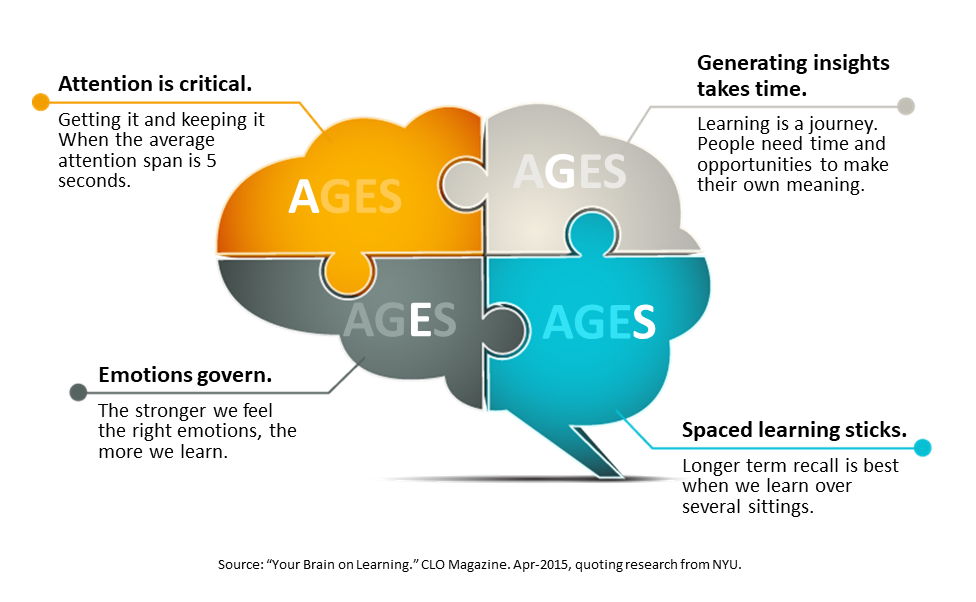
The tl;dr version:
- Get people in a room together, live if possible, and begin building trust within the cohort. They need to be able to share the good and the bad. The group of learners need to feel comfortable enough to talk real issues, or for people leaders, share interactions without the fear of it being repeated outside the room.
- Include space in-between the lessons where they can practice what they've learned on their own.
- Everyone reports back to the cohort the results when the group gets back together.
- In the programs I design, this is where group coaching get positioned. Between the learning sessions where participants in the cohort discuss the challenges (or wins) of applying the concepts outside of the classroom and in their regular day-to-day.
My own take on this has come from running into the consistent wall of getting excellent feedback and retention of learning material after an engagement, and seeing how little of it sustains in the workplace three months later.
The groups that became more successful was the accountability attached to knowing that someone was going to ask them what happened after the class was over. You don't even have to survey for that one, it can be a calendar invite the participant creates with their own leader, or another cohort member who will attempt something similar. I started moving those revisits as another sessions, made them smaller than the large learning group, and you'll hear about the work getting done or what's getting in the way.
It was the practice that taught me to structure programs like this before I had terminology for it. Most of us will do work for the people we connect with in a cohort that we won't do for a facilitator, even if we really enjoyed the class. That peer pressure we were warned about in grade school, turns out it can go both ways. Feeling behind, or the feeling that change is possible, is a more powerful motivator than anything I say in a room. That's I spend so much time getting a group of a dozen people or so properly introducing themselves from the get go. I often recommend an objective assessment, like Predictive Index, to go beyond names and roles.
Hybrid learning lately often gets reduced to being described by its ratio or what self-paced work is being assigned. How many hours in the room, or in front of a screen? How many he hours away from the desk, the phone, the inbox? Will this be recorded, will the powerpoint be shared afterwards? Don't worry, we all know no one's going to watch that. Even David Rock in the episode challenges anyone to name the last three zoom recordings they've watched.
The connection in a live sessions creates "neural synchrony," a unconscious check your brain does to see if other people are really there and watching. Recordings can't fool it.
Sequencing becomes less a clever way to show the wealth of content, or mea culpa to packed outlook calendars, but connect the way we learn to the program's objectives. Just like in professional coaching, it's often that a majority of the work happens outside of the session.
Traffic Signs
Some of the news and content I've been consuming related to the spaces I work in... Learning & Development, HR/People Ops, Leadership, OD, and Professional Coaching.
Lex Roman on Michelle Jackson of Creators Getting Paid
The worst creator advice is "be consistent." I much prefer "build for longevity."
 Lex Roman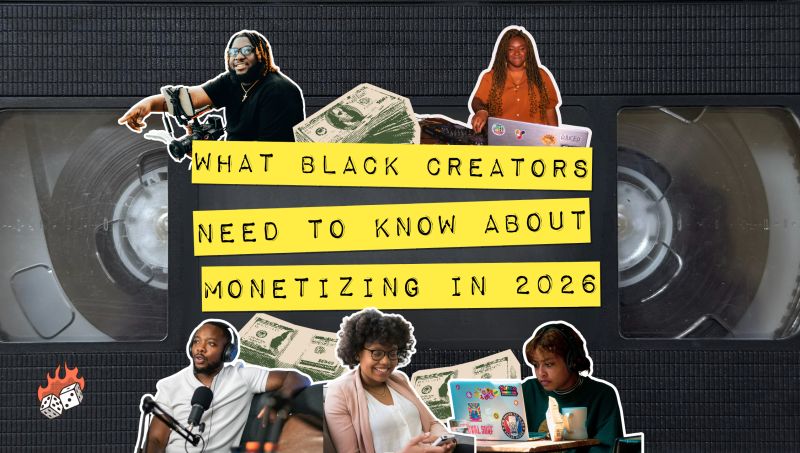
- I'll admit I have been in the happen of repeating that saying. The idea of sustaining and longevity certainly resonates more now as moving into freelance and solo work. It's also similar to other areas, like career transitions, where the pressure to really hit the ground strong and running, covertly tricks us into thinking we will have a never-ending wave of focus and energy to get "there."
- Michelle's interview referenced in the post is absolutely work checking out as she's happy to talk about the specific tactics she's taking. She talks about her own capacity for project work and even how shes pricing her different ventures. The interview focus is highlighting the contemporary landscape for individual creators, specifically black creators. I also believe that there's plenty here for professionals and soloprenuers alike.
- If you're not familiar with Lex, they are a very active presence on LinkedIn, sharing they're own internal business process as well as doing some great journalism here with a solid interview. Lex runs Revenue Rulebreaker, a newsletter and community that brings together all sorts of solo business ventures and freelancers.
Make your robots sound normal
AI Skill - Github - A skill for your AI Chats that improves the clarity of their replies
 danyuchn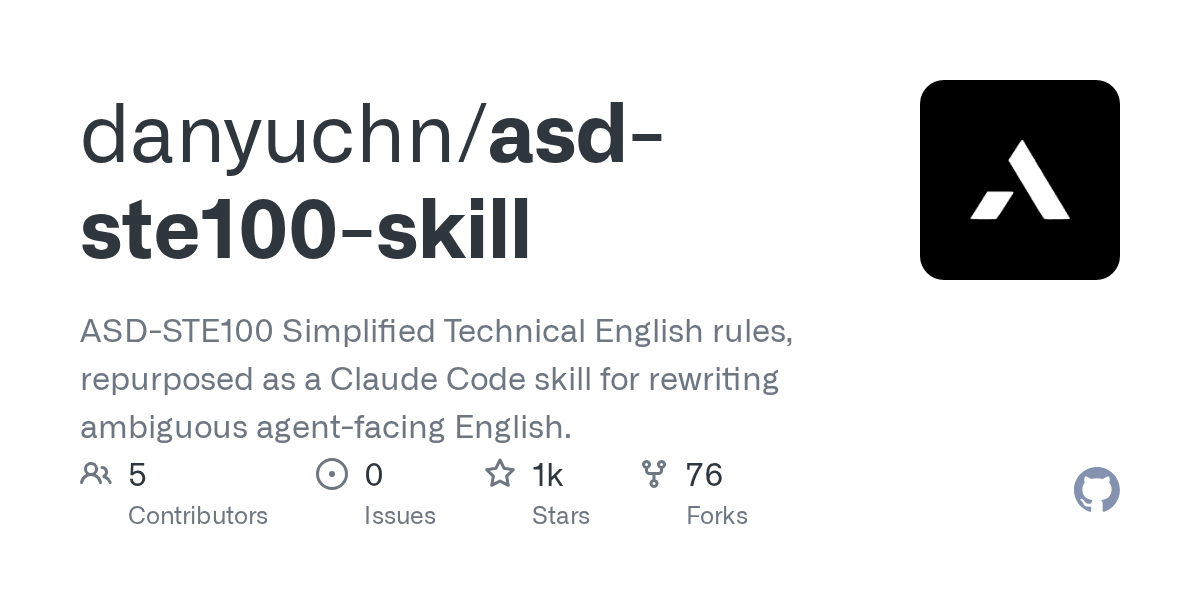
- Anyone spending times with AI tools starts to get these blocks of text replies that start to wash over you and tune out. A big part of that is in how it can get overly complex, and it turns out there was a human solution to that about 40 years ago.
- ASD-STE100 was the standardized writing instructions for aerospace engineers to be able to communicate to non-native english speakers that had a secondary benefit of clarity to the regular non-analytical people who had to use the machines.
- This is a claude skill, but can be given the same skill instruction into gemini, chatGPT, or notion. You could also try sneaking in, "explain this to me in ASD-STE100" into prompts/instructions with some success.
Recruiting is a legal mess
Article - Boston Herald - "AI weeds out older and minority job applicants, lawsuit against Workday claims," Jean Marbella, August 2026
- If you're not caught up, Workday's lawsuit in federal court is proceeding for their AI tools. The article is a glimpse into the kinds of discussions around the impact of these tools. They're going to be tied up in state and fed courts for a moment.
- The short version of this is applicants who applied at a company using Workday's ATS would get a ranking via the AI process, and that same ranking would persist even if the applicant applied to another company using workday, or if they applied with a new resume or position. Needless to say, human decision making was suppose to be the last filter, it should never be making hiriing decisions. A spicy debate may eventually be settled on which came first, the agentic application chicken or the automated talent acquisition egg.
- The reason this is worth keeping an eye on is at the same time Workday is also in talks to go off the stock market and private. Since the lawsuit was started a couple years ago, it's not necessarily directly correlated, but there's a high likelihood that there are connections that factor in the moves here. Either way, the outcome of this is going to place a directional flag on legal risk for AI hiring tools. This also is indicating market response to the value of big software where the customers are highly dependent or locked into the ecosystem. My friends who have overseen any HRIS integration, I hope you take care of yourself tonite.