L&D Takes the Stand
A training program gives leaders something tangible to point to. The people taking it may have a different verdict. Some familiar L&D habits get their day in court.
For a moment there, I almost forgot that L&D folks can have fun. Fun will be allowed, but just this once.
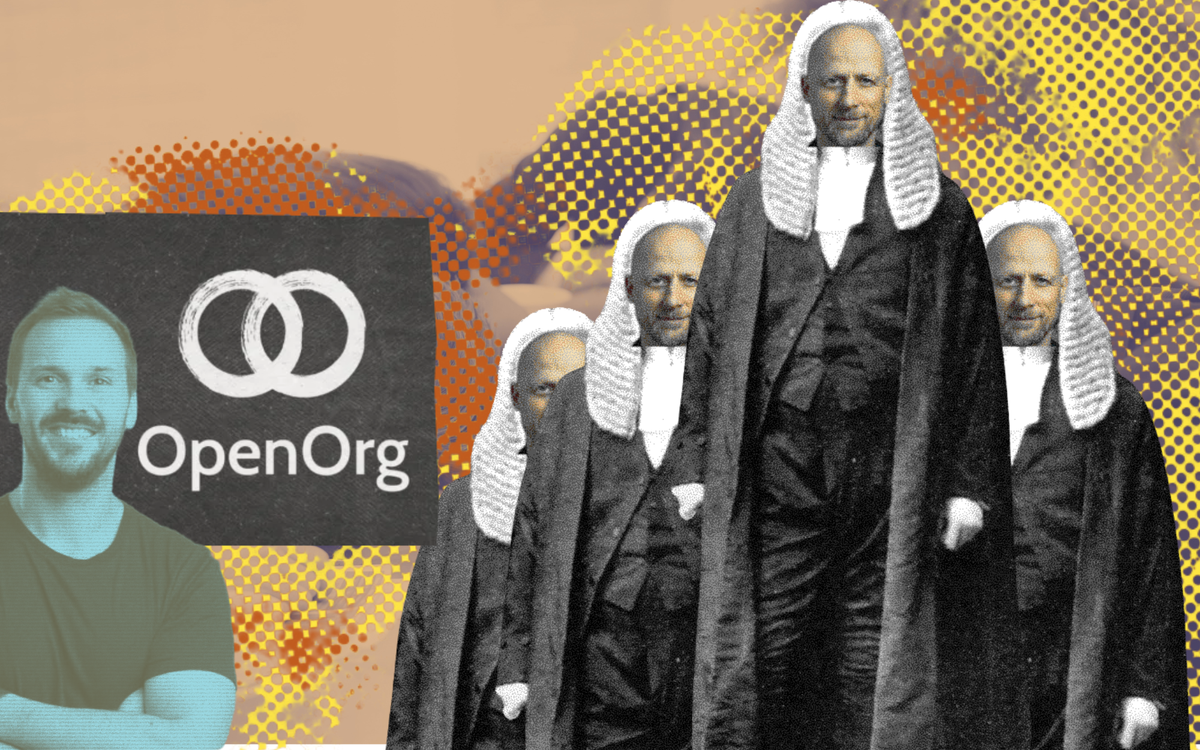
The L&D Podcast, hosted by David James, the CLO of 360Learning, had a recent episode I really resonated with - The L&D Podcast Live: L&D Myths on Trial. The setup is basically trying to put long-held sayings and anecdotes to rest. They also had live viewers voting on the strength of the arguments as the guest speakers (Becky Willis, Jess Almlie, and Kevin M. Yates) plead their case to the court/judge. A little theatrical, a little adorable. Kevin will get a standout nod for presenting in the format. I heard this via audio podcast, so I didn’t catch David, the host, in a full judge’s robe and wig, and Becky channeling One Flew Over the Cuckoo’s Nest with the bowtie. I’ve linked the video version which has some slides too. I enjoyed it and there’s plenty of contemporary ideas for talent folks and facilitators.
In this release, I’m sharing my top takeaways from it.
Short Order Cookin’
Jess argues to the court against the idea that L&D’s value lies in delivering what a leader requests. In my first L&D role, we called this short-order cookin’. Someone comes up to the Chipotle fast casual lunch line: they tell you what they want, you wrap it up, send them to the register, produce the training… and next order please.
You don’t want your calendar run by the loudest voices
Learning and Development functions will get the usual fare: written communication, difficult conversations, business acumen, Excel, or customer service. People might already know how to use that software or demonstrate that skill while rushing through an always expanding workload. Different managers might also expect different things in their own definitions of excellence in that skill. This is when you normally start asking probing questions or the infamous needs analysis comes into play.
It’s at this moment that I can see the trap I’ve walked into before. I teach and coach on leadership, and so I see leadership problems in quite a lot of things. The manager with the product release around the corner or the director with priority client demands that needed something yesterday has a different order of operations. They are going to push to have their workforce improved at scale, back at the desk with the skill issue resolved. Taking on what seems to be another prolonged initiative to fix what they need working now will not spark joy.
For people and talent teams, constantly having ideas squashed down to the minimum viable offering can create a “pick your battles” attitude. On the other hand, passively delivering requested solutions awaiting the “see, I told you” moment makes for pretty unpleasant working relationships. That can push mid-level leaders to go rogue and find their own solutions next time.
It’s a stronger play to set realistic expectations about what the requested solution can improve, and what a little more time, reinforcement, or a different modality could make possible. 1
Jess puts the capacity question plainly: “There is a no inside of every yes.” Agreeing to a request without discussion also eats away at your capacity and sets a precedent for future interactions. Leaders may request this model because that’s what they can conceptualize or what they’ve been previously exposed to. You don’t want your calendar run by the loudest voices on a first-come, first-served basis.
Measure What Matters Most
Kevin pleads his case against the myth that impact measurement requires complex, large-scale evaluation, pointing back to business performance metrics the organization already uses. Attendance tells us who showed up; reaction surveys tell us about people’s experience of the class. His argument takes us toward behavior and results in the Kirkpatrick model.
It’s been a fairly persistent question to solve historically. If you're helping salespeople spend more quality time in discovery, simulated practice conversations could reveal whether your salespeople can use the techniques you’re teaching. You’ll want to know if they use those techniques with real customers and if their results change. Those results still need interpreting because other factors contribute too. 2
In his closing remarks to the court, Kevin says that “it takes a village to impact workplace performance.” That supports taking a look at the class’s contribution alongside the other influences on performance. Surveys and evaluations are much easier to track and quicker to collect. That doesn’t make them the right ones to focus on exclusively. You want evidence that connects from the learning to changes in how the work is getting done, and then up to the organization’s results.
Is Something Better Than Nothing?
Later in the L&D podcast, Becky argues that poorly delivered training solutions damage a trainee’s willingness to engage with future learning. Tying into Myth 1’s “short-order cooking”, it can also be pressure for turn-around speed that’s a culprit here. The worst version of this scenario is when you as a facilitator find out, in real time, that your class content doesn’t match the gaps the participants are actually experiencing.
The person requesting the training and the people doing the work can describe the very same problem completely differently. Kevin also notes that a training program gives leaders tangible evidence that they’ve responded to a problem. That can make “at least we’re trying something” sound convincing.
“Here’s what I was asked to cover, but here’s what I’m hearing from you.”
If the training misses the mark on what participants are actually dealing with, that reinforces their doubts about whether this class, or the next one, will be worth their time.3 You can practically hear the groans from the other side of the screen when they see calendar popups in Outlook.
This myth really deals with participant sentiment towards corporate learning. In my own facilitation, I address those possibilities up front, giving participants space to speak frankly. Even simply calling out a mismatch and asking the group what they think is going on can surface valuable insights. Personally, I would phrase it as: “Here’s what I was asked to cover, but here’s what I’m hearing from you.”
I have no problem prioritizing the learner experience over classroom objectives any day, pulling from my coaching and facilitation skills to adjust. Even then, confidently carrying the room unscripted has its own limits to counterbalance. Some participants need more structure or time to absorb new considerations that come up in discussion. The group may not truly have authority to change workflows causing the problem.
This also operates under the best practice of avoiding overstuffing live sessions, even if your instinct is to min-max the time you can get everyone together. Leave breathing room in the design for the unexpected, even though it feels rare for calendars to align. If every minute is stuffed with content, it makes it quite challenging to act on what your participants are telling you.
If possible, try a small improvement in the room or immediately afterward, even though some problems take more work. Sometimes the greater awareness is the bigger win. You can take what you learn from the group back to the stakeholders and explain what still needs a decision. Before your next session, pick one possible assumption the content has to check with the people in the room. Leave enough space in the agenda to do something with their answer.
1 I know your spidey sense is tingling, but give the manager an example they can weigh the pros and cons against. Show what a little more practice, follow up, or split modality can make possible and what it requires to deliver. This gives your stakeholders enough to decide when the extra time is worth the investment. This avoids the all or nothing thinking and helps them start to see you as a trusted adviser.
2 Those post-class results still need to be untangled. The practice session, the ride-alongs, and previous experience can all contribute to the final results. Better sales numbers alone won’t say how much credit the class deserves. Comparing salespeople who took the class with those who didn’t might help, but the groups may differ in other ways too.
3 My mind goes to a parallel connection with change fatigue. We expect our people to take on new initiatives while keeping up with all the work they currently have. If the improvements don’t live up to the promise, or aren’t clearly visible… it makes perfect sense why their patience with the next shiny new idea starts wearing thin.
TRAFFIC SIGNS
Some of the news and content I’ve been consuming related to the spaces I work in… Learning & Development, HR/People Ops, Leadership, OD, and Professional Coaching.
Arise, Open Org Workspace!
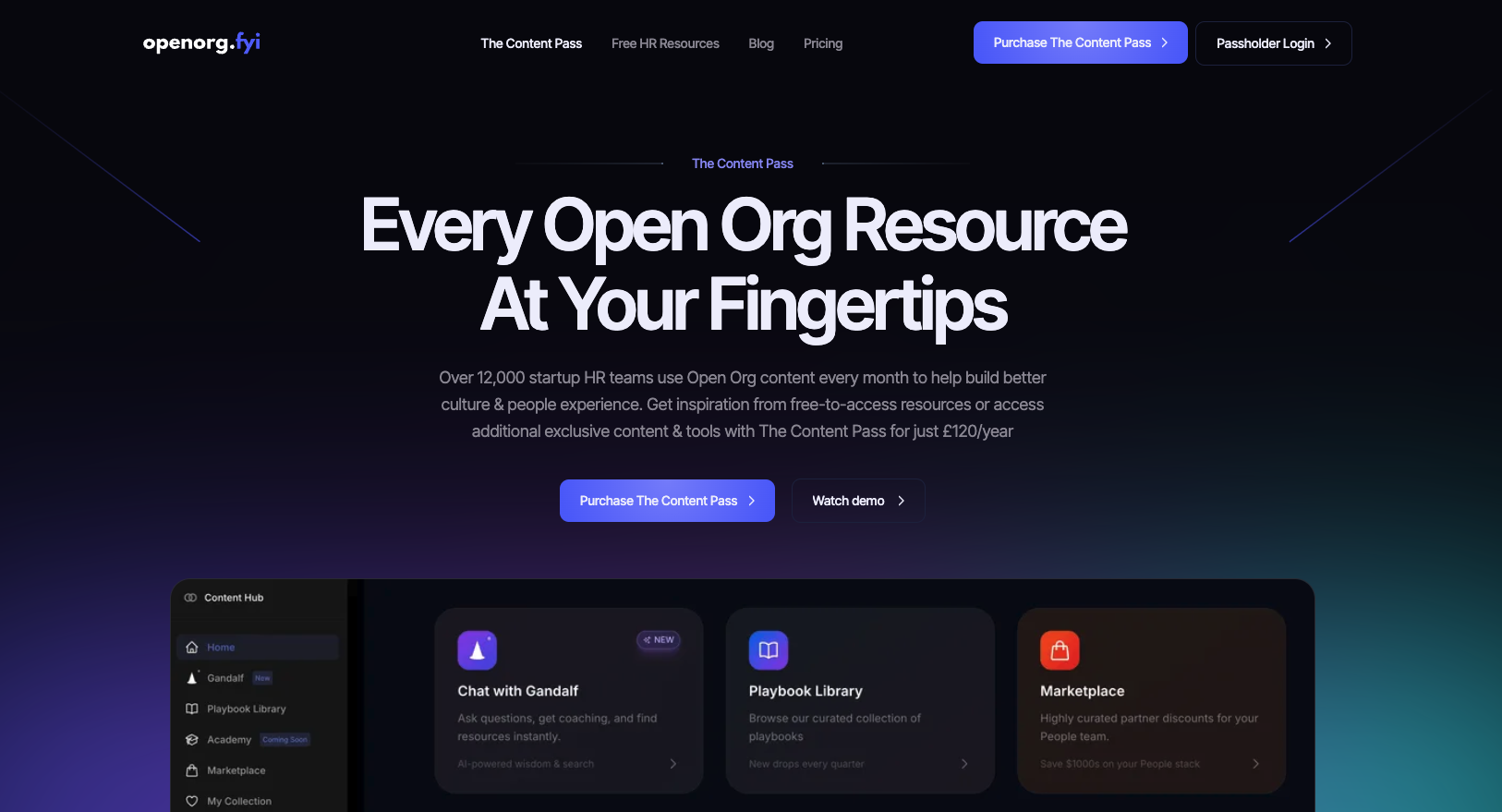
- I’ve really come to appreciate Open Org and watching it grow as a movement. Especially given my disappointment with some historic four-letter HR associations over the past six years or so. Co-founder Adam Horne has brought together a lovely practitioner community with shared resources and tools that are insanely valuable examples for People folks in startup and scaling teams.
- His post is on culture being a soft-skill catch-all, but the launch of Workspace was news to me. They are certainly making a viable business out of a resource I already value. What was free remains free, and their paid Workspace access gives AI usage with their curated library and additional content. Having a focused toolset that doesn’t handicap what you’re currently using it for sounds like a very reasonable ask.
- The site was polished long before vibe coding became a thing, so Workspace to me appears to be an example of it done extremely well and tastefully.
- Their new metrics and benchmarks are an interesting case to continue supporting them. They’ve got data from 600+ startups and scale-ups and a growing set of comparisons. Most of these industry datasets are historic and much more expensive. I’ll be personally contributing and exploring the metrics side here.
We have enough AI at home
LinkedIn Post by Ethan Mollick
- Ethan Mollick, a Wharton professor, was one of the first on the scene when I caught his book Co-Intelligence, so I would say he’s got the juice when it comes to his takes.
- His post is that the big models we have today are already enough to keep changing our work and the workplace. I read this alongside the skepticism about major AI companies calling to hit the pause button on innovation at all costs. I’m skeptical too…the safety argument could provide cover for companies struggling to keep delivering groundbreaking model improvements every couple of months. My take is that the jet engines have already sucked up all the
stolenavailable data out there. - Mollick is also calling out the companies and industries to shift focus on developing more ways that extend human capability. I also agree here. Not only does this line up with the last dispatch, I even made a workshop for small businesses to do just that.
Angela Duckworth hits the griddy on Viktor Frankl
- Angela Duckworth, of Grit fame and former co-host of No Stupid Questions, has a new book out, Situated. I just got my copy, so haven’t read it yet. According to the publisher, it’s about our surroundings and how the people we surround ourselves with affect what we can actually do. I’ll be giving my first impressions in the next Dispatch.
- She’s doing the rounds with her release, and the reel I’ve linked has her fresh take on Viktor Frankl being slightly misunderstood. That was a new one for me. Even if you’re not familiar with Viktor Frankl, you’re familiar with him. He gets quoted in every leadership book published since the ’80s. I’m beginning to suspect bookstores won’t even stock one in that section unless he’s quoted.
- I’m very much eager to see what she’s learned since Grit. The book got a good roasting on If Books Could Kill, and the impression I got is that even Duckworth was aware of most of the critique they raised in that episode. Mostly it relates to how far people have carried it into education, so I’m interested to see if that comes up in her new book.
That’s all for this issue. Thanks for reading, and I’ll be back with first impressions of Situated next time.