Gaucho didn't know he was in a leadership exercise
What an arena revealed about clarity, and the conversation most teams wait too long to have.
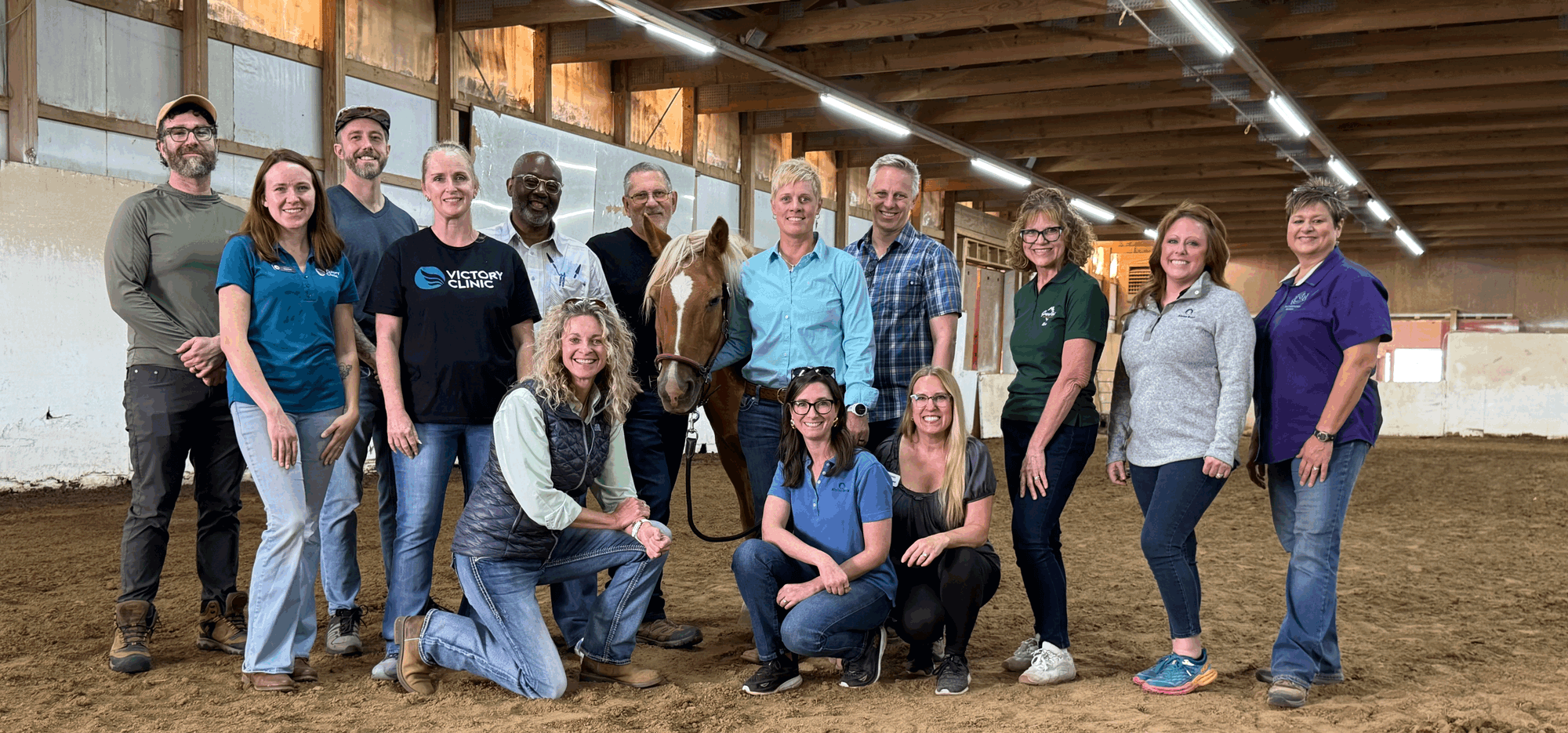
The plan? Put a group of leadership consultants in an arena and ask them to demonstrate clear communication to the only participant who could not even politely pretend to understand us.
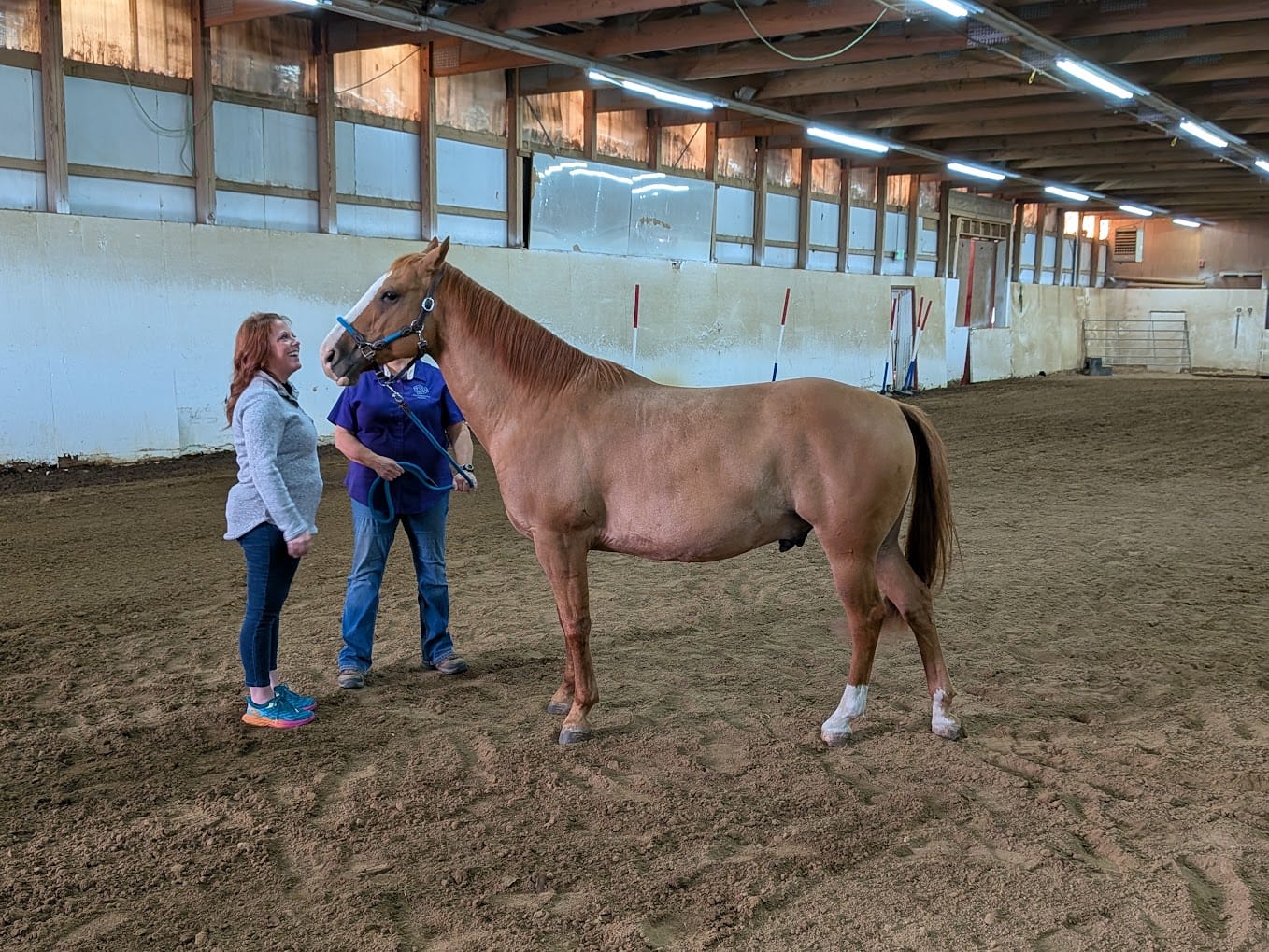
The horse's job was to walk into a box on the ground outlined by four striped poles. Our job was to make that happen as a group.
Ginny Telego of The Collaboration Partners, our facilitator, had explained the exercise to us. Gaucho, the horse, didn’t get a copy of the agenda.
This was an equine leadership demonstration, and Ginny’s question for the day was deceptively concise: How do I show up?
What followed was a fast version of something I see on teams all the time. Plans get set but not revisited as things change, and the meta discussions that should happen at the first signs of trouble wait until it’s a big problem, or the project is already over.
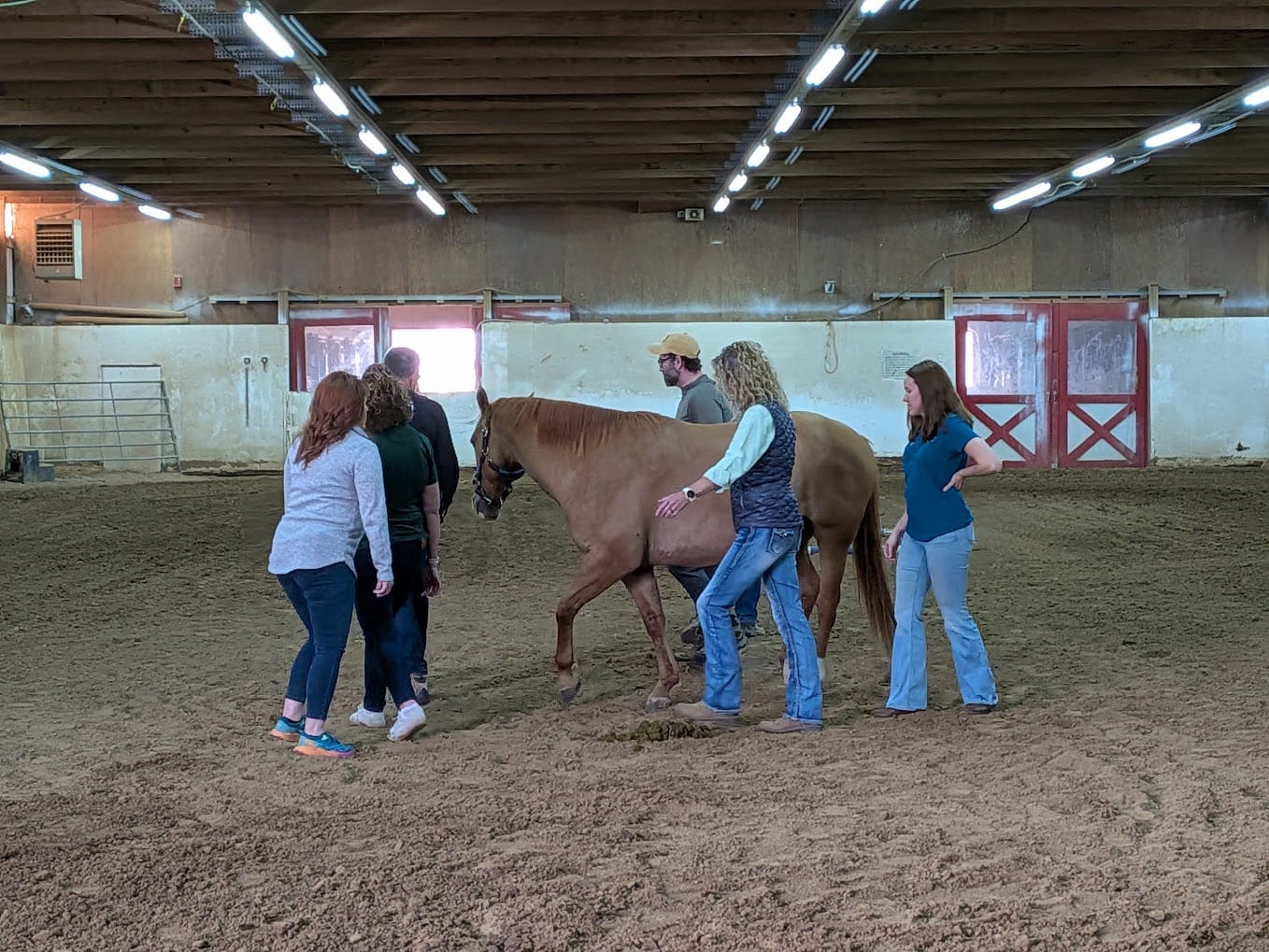
We set up in a diamond. The two people who had just done the one-on-one exercise with Gaucho took the lead at the front, and the rest of us filled in the sides and the back. I took a sentinel spot on one side.¹ Ginny compares sentinels to middle managers.
We moved at different speeds, and the people who knew horses seemed the most comfortable. I started to wait for the people in front of me to do their part before I fully stepped into my role. Pretty soon, all of us were watching the horse instead of our leader or the box.
The horse had backed into the corner of the arena, and our carefully assigned leadership roles were beginning to look like an idealistic novelty at best. Gaucho seemed much more interested in the other horses and handlers at the far end of the indoor ring.
When our first attempt started stalling a minute or so in, Ginny didn’t rush in to take over. She simply asked us:
“What’s happening right now?”
Wait a minute. We had assigned roles. We had an intention. We were doing our best impression of the leadership things! The horse, however, still had no clear idea what we wanted.
We stopped our comical attempt, had a quick check-in about what each of us was experiencing, and hit the reset button. Ginny showed me how to use my arms and body position to give the horse a clearer boundary. When he started moving, I moved with him. Once we were in motion, someone who had been on the side or in the rear could suddenly end up the person in front.
Gaucho started walking with us up to the box, and kept going right past it.
We had finally communicated “move.” But... none of us had clearly communicated “stop.”
Afterward, Ginny told me her take: once we started working together, people went where they were most needed, and roles changed with the direction the horse was heading. With more time, she would have sent us back to our original roles to see how much less shuffling we needed. “In the beginning, everyone was trying to figure out where they belonged and how to best contribute,” she said. “It’s a beautiful experience for people to see in real time the Forming, Storming, Norming, Performing process, especially for a team that hasn’t worked together before.”
She cited an example of a data engineering team she’d worked with. Two months later, their director said they were still paying attention to who was leading from the front, middle and behind. In weekly project meetings, when everything feels like a scramble, someone says, “Let’s stop our feet,” a cue from their session, and the group checks in. The director told her it works because everyone knows what the phrase means.
Ginny’s CORE Model² gave us names for what was missing. In the arena, those ideas don’t feel like labels on a slide. You can see the missing clarity, feel the hesitation while everyone waits for someone else, and watch execution improve once the relationships between people start to cohere.
Horses present us with oddly clean feedback. A horse does not like or dislike our strategy. It does not inquire if it’s living up to the expectations of its full horse potential. The horse does not Slack anyone afterwards about the meeting that should have been an email. It simply responds to conditions and the communication in front of it.
“Horses don’t have to do the things we ask them to do,” Ginny told me. Animals will move out of fear for a while, but a horse that follows because of the relationship we have with it is actively choosing to. Despite what those classic films impress upon us, horses aren’t wired to stay loyal, no matter how they’re treated.
My internal story in the ring went something like: I’m a sentinel. The horse isn’t ready. We’ll get moving once the people at the front start. When I’m at work, I can tell myself that I was clear, that people already know their role, or that someone on the project team will happily step forward if needed. Most places unintentionally default to the org chart as a given, even when it doesn’t reflect how things get done or what’s needed from each person to tackle the next challenge.
The fix starts with pausing: having a conversation when the first signs of something not working come up. In the arena, that was a single question from Ginny and a quick check-in. Less than 10 minutes.
After the demo, I didn’t get a chance to circle back with Gaucho about the story I was telling myself.
¹ The formation comes from June Gunter’s Diamond Model of Shared Leadership, which Ginny is certified in. The lead mare sets direction and pace from the front, and the lead stallion supports from the back. Sentinels, on the sides, work just like middle managers: passing information between the lead in front and the leadership in the back. Everyone keeps aligned with the direction set by the front.
² Ginny built the CORE Model® from 14 years of qualitative data. It looks at Clarity, Ownership, Relationships and Execution. She pairs it with the Diamond Model, as together, they bridge the gap between what a group is missing and the capability it needs.
TRAFFIC SIGNS
My review of Angela Duckworth's Situated is up. A light-to-decent 8, and one of the rare second book follow-ups that make the first book better.
 Jacen Spector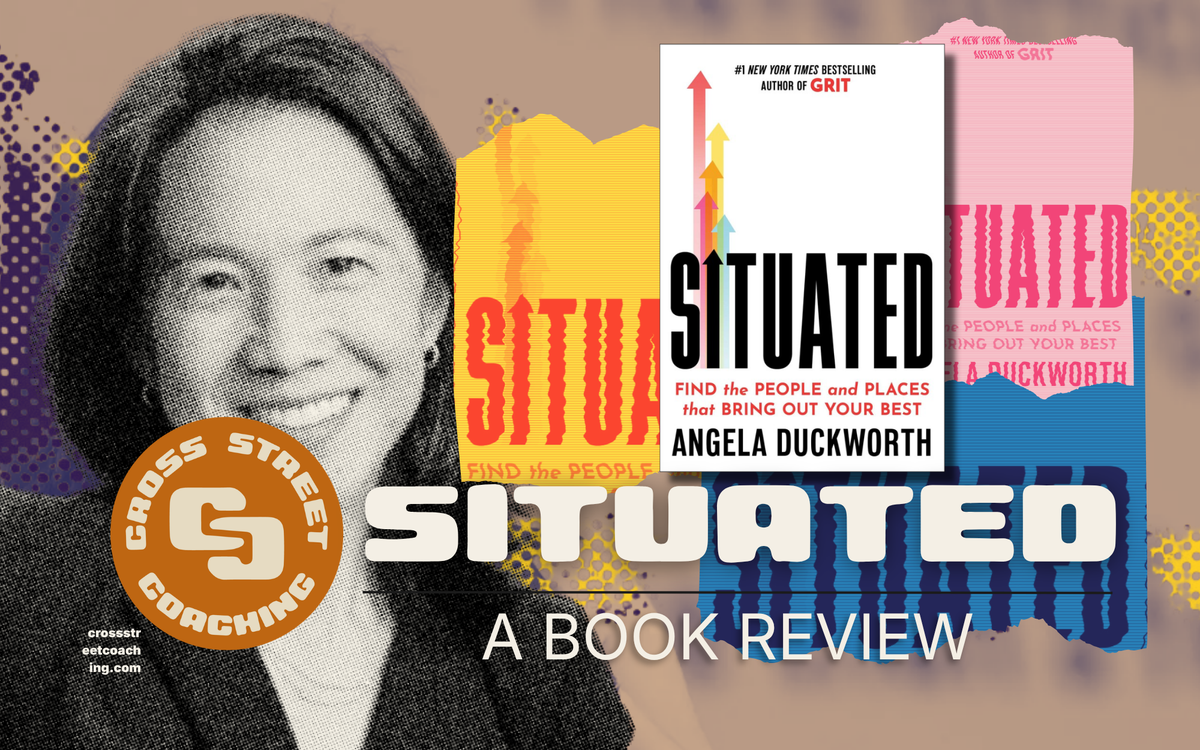
That's all for this issue. If your team has its own version of "stop our feet," hit reply and tell me about it. Thanks for reading, and I'll be back in two weeks.